
More results

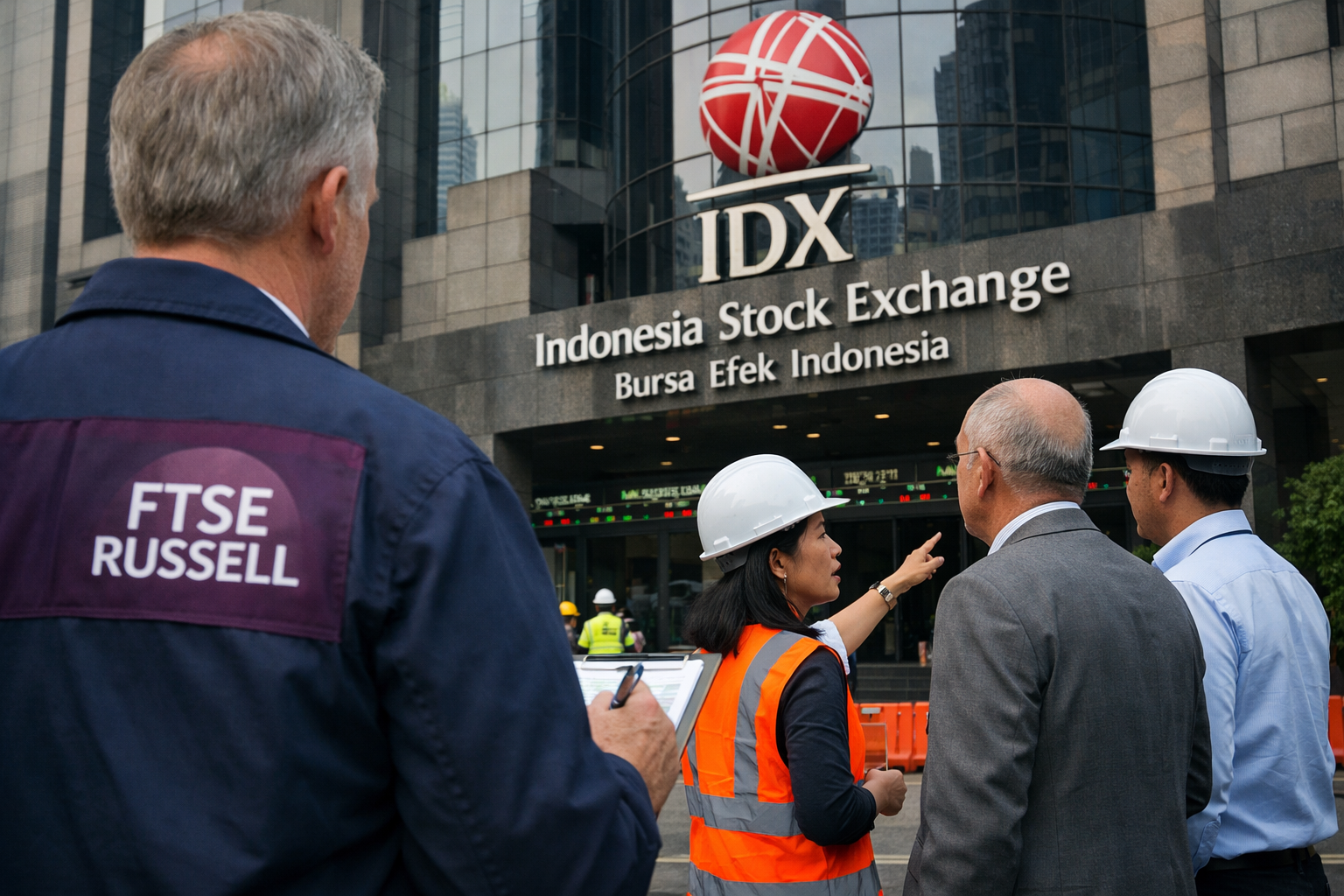
In a move that underscores persistent concerns among global institutional investors, FTSE Russell has postponed its scheduled March 2026 review of Indonesian stocks, citing uncertainty about trading conditions and the ability to accurately assess how freely shares can be bought and sold on the market. The decision, announced in early February and confirmed by the index provider’s own statement, follows a similar action taken earlier by rival benchmark compiler MSCI, which had also paused updates to its Indonesia indices amid questions over market transparency and investability.
FTSE Russell’s equity indices are widely used benchmarks for global investors, particularly those managing passive funds whose portfolios are structured to track major international indexes. Changes to these indices — whether additions of newly listed companies, adjustments of stock weightings, or periodic reclassifications — typically influence the flow of billions of dollars each quarter. By postponing the planned review rather than proceeding with the usual rebalancing, FTSE Russell has effectively froze changes to Indonesian stocks in its products until at least mid-2026, a step meant to缓冲 potential market disruption while key reforms are underway.
The heart of the issue lies in uncertainty over the so-called “free float” of Indonesian equities — that is, the portion of a company’s shares genuinely available for trading by public investors. According to FTSE Russell’s announcement, feedback from its External Advisory Committee and market participants highlighted potential problems in measuring free float accurately, especially as Indonesia’s capital market authorities implement reforms aimed at strengthening transparency and data reliability. Until there is greater clarity and consistency in how ownership and liquidity data are reported, the index provider said it was deferring major index changes that depend on those inputs.
This technical postponement has broader implications beyond bookkeeping. For one, it comes at a sensitive juncture for Indonesia’s reputation among international asset managers, many of whom heed index reviews as signals of market accessibility and stability. A pause in index activity may discourage some quantitative or passive investments that would otherwise have flowed into Indonesian stocks, particularly if they were expected to be added to global benchmarks after reclassification. At the same time, however, officials in Jakarta have sought to frame the decision as supportive of ongoing structural reforms, rather than a judgment on the fundamentals of the Indonesian economy or its marketplace.
Officials from the Indonesia Stock Exchange (BEI) and financial regulators have emphasized that FTSE Russell’s move was rooted in technical, transitional issues linked to reform implementation, not a concern about Indonesia’s status as an emerging market or its long-term investment prospects. According to statements from exchange leadership, FTSE indicated backing for the reform agenda announced by regulatory authorities, which includes efforts to improve market integrity and reporting standards. FTSE Russell said it will continue to monitor progress and issue another update before the June 2026 quarterly review of its Global Equity Index Series, with the next major announcement scheduled for May 22, 2026.
Investors and analysts have interpreted FTSE Russell’s postponement as a cautious signal rather than an outright censure, reflecting an industry-wide emphasis on solid data and transparent trading environments. But the broader backdrop — including heavy volatility triggered by earlier warnings from MSCI and recent negative outlook adjustments from credit rating agencies — means foreign portfolio flows into Indonesia are being watched closely. Market participants will be closely following how quickly reforms can satisfy international benchmarks’ criteria, as well as what the delayed review might mean for asset allocation decisions in the months ahead.
In short, FTSE Russell’s decision is both a reflection of investor caution and a test of Indonesia’s capital market reforms. Whether this postponement ultimately stabilizes trading conditions or slows foreign inflows will depend on how swiftly and transparently authorities can address the concerns at the heart of the delay.
Sector and Fund Impact, and How Investors Are Navigating the Delay
The postponement of FTSE Russell’s index review is likely to have uneven effects across Indonesia’s equity market, with large-cap, liquid stocks expected to weather the impact better than smaller or tightly held names. Blue-chip banks, telecom operators, and consumer staples companies — which already enjoy high foreign ownership limits and consistent trading volumes — are less dependent on index rebalancing flows and may continue to attract selective foreign interest. In contrast, mid-cap and newly listed companies that were candidates for increased index inclusion could see weaker demand, as passive funds delay allocations until index certainty improves.
The sectors most exposed are those where free-float and ownership structures are more complex, such as natural resources, infrastructure, and conglomerate-controlled industrial firms. These companies may face prolonged valuation discounts as global investors apply a higher risk premium while waiting for clearer data on tradable shares. Property and construction stocks, already sensitive to interest-rate expectations and government spending signals, could also experience heightened volatility as foreign participation remains cautious.
From a fund perspective, passive vehicles tracking FTSE Global Equity or emerging-market benchmarks will see minimal immediate portfolio changes, but the delay removes a potential catalyst for inflows that some managers had anticipated in 2026. Actively managed emerging-market funds, meanwhile, are likely to become more selective, favoring stocks with strong governance, transparent ownership, and proven liquidity over thematic or reform-driven bets.
For investors, the current environment favors precision over broad exposure. Market participants are increasingly distinguishing between “index-safe” stocks and those vulnerable to further review delays. Domestic investors may find opportunities in fundamentally strong companies temporarily overlooked by foreign funds, while international investors are prioritizing downside protection and flexibility, often keeping allocations light until clearer signals emerge from FTSE Russell and regulators.
Ultimately, the delay reinforces a shift already underway in Indonesian markets: index status alone is no longer enough. Companies and sectors that can demonstrate transparency, liquidity, and governance resilience are likely to attract capital even in a cautious global environment, while others may need to wait until reforms translate into measurable improvements before benefiting from renewed foreign inflows.
Join the Conversation
Please log in or create an account to view comments and post your own.