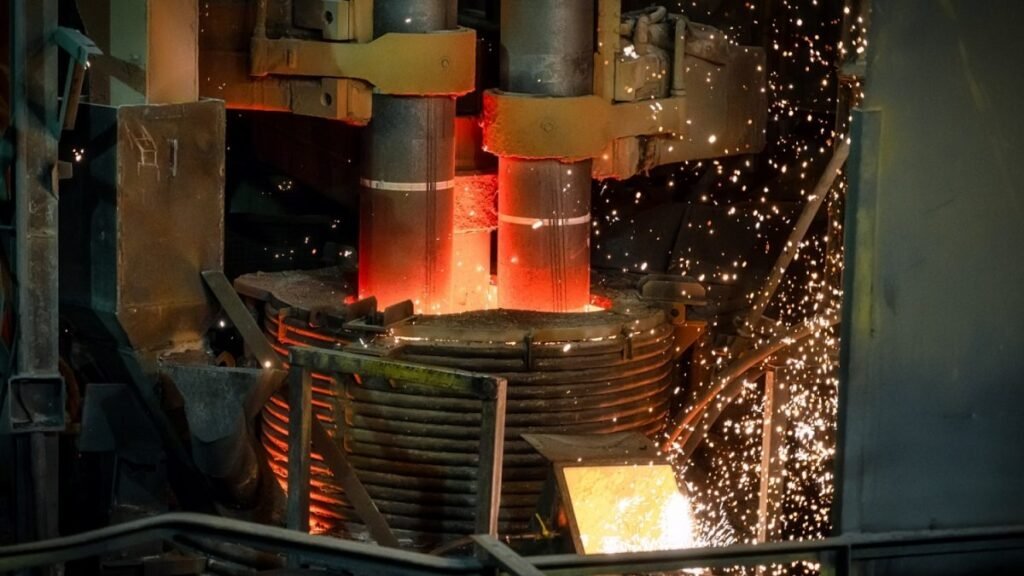
Sustainability in heavy industry is increasingly a competitiveness and security issue, not merely an ethical one. EU carbon pricing, fossil-free steel, military fuel efficiency, and Japan’s pollution reforms show how environmental costs can drive innovation. Indonesia’s coal-powered nickel boom, however, highlights the long-term economic and environmental liabilities of unsustainable industrial growth.
On August 12th, at a regional airfield in upstate New York, a 25,000-pound aircraft with a 106-foot wingspan lifted off the runway at Plattsburgh Airport and stayed aloft for 27 minutes on nothing but batteries. And this might just be what Indonesian airlines have been looking for.
As wrongful corruption convictions mount and payment arrears stretch into years, Indonesia’s B2G and BUMN contracting environment has crossed a threshold that private capital cannot ignore.
The United States enjoys a unique position in which its currency serves as the primary reserve asset, invoicing currency, and settlement medium for global trade and finance. This position allows Washington to finance large fiscal deficits, including defense spending, at relatively low cost compared with other major powers.
In the classical imagination of liberal capitalism, markets and governments perform distinct, almost complementary roles. Markets allocate capital through price signals; governments set the rules of the game. One is meant to be impersonal, the other accountable. The boundary between the two has never been perfectly clean, but for much of the post-war era it was at least intelligible. That boundary is now eroding.
Recently, the private sector has been given more leeway to develop and produce military equipments. This is a positive development as it reduces reliance on SOE’s and if managed correctly, can transform the Indonesian defense industry sector into a dual-use force that can simultaneously hasten the pursuit of self-sufficiency and becoming a major economic driver.
The principles embedded in the Geneva Conventions remind us that even in conflict, there are lines that should not be crossed. As economic tools become more powerful, those principles must evolve to apply not just to bombs and battlefields, but to banks and balance sheets. But the growing perception that systems like SWIFT can be weaponized risks accelerating the fragmentation of the global financial system.
Both MBG and KDMP reflect an ambitious vision of state-led development. They attempt to address social welfare, employment, rural development, and food security simultaneously. The challenge is how to implement them in ways that strengthen communities rather than unintentionally creating new forms of dependency or financial vulnerability.
When Prabowo Subianto campaigned on the promise of transforming Indonesia into a high-growth economic power, the philosophy was clear. The state would not regulate the economy, but it would lead it. Yet Indonesia’s experiment with this model is raising uncomfortable questions. Instead of producing an ecosystem where the state catalyzes private innovation, critics argue that it risks drifting toward something far less productive: a system where political proximity determines access to capital, state programs crowd out private initiative, and a small circle of elites captures the benefits of public spending.
Indonesia’s economic trajectory raises a deeper strategic question. Is the country becoming a model of stable emerging market growth, or is it drifting into a comfortable form of stagnation? Indonesia’s future therefore depends on whether stability becomes a platform for industrial acceleration or a ceiling that limits ambition.