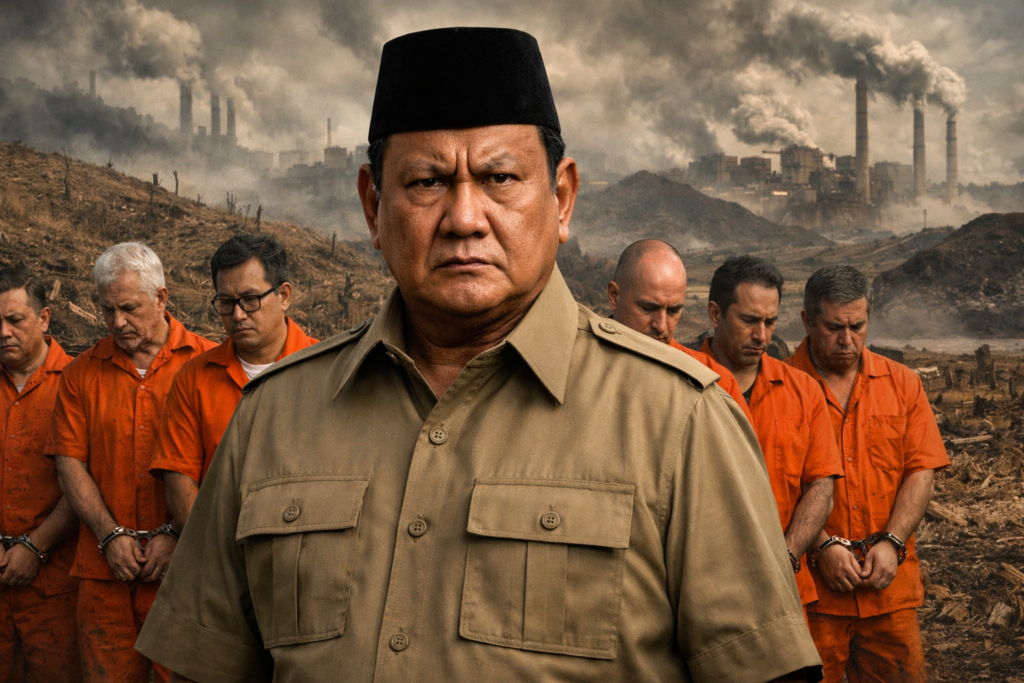
As wrongful corruption convictions mount and payment arrears stretch into years, Indonesia’s B2G and BUMN contracting environment has crossed a threshold that private capital cannot ignore.
When Prabowo Subianto campaigned on the promise of transforming Indonesia into a high-growth economic power, the philosophy was clear. The state would not regulate the economy, but it would lead it. Yet Indonesia’s experiment with this model is raising uncomfortable questions. Instead of producing an ecosystem where the state catalyzes private innovation, critics argue that it risks drifting toward something far less productive: a system where political proximity determines access to capital, state programs crowd out private initiative, and a small circle of elites captures the benefits of public spending.
In late 2025, catastrophic floods in Sumatra led to significant environmental and human damage, prompting a government intervention in corporate land management. President Prabowo Subianto’s revocation of permits from 28 companies and their transfer to state-owned enterprises raises questions about genuine environmental accountability versus state control. This shift jeopardizes ecological restoration and may redefine Indonesia’s governance trajectory, risking repeated disasters under new ownership.