In the classical imagination of liberal capitalism, markets and governments perform distinct, almost complementary roles. Markets allocate capital through price signals; governments set the rules of the game. One is meant to be impersonal, the other accountable. The boundary between the two has never been perfectly clean, but for much of the post-war era it was at least intelligible. That boundary is now eroding.
Beneath the daily fluctuations of currencies and equity markets lies a structural hierarchy of safety, liquidity, and trust. When uncertainty rises, capital instinctively migrates toward the deepest and most liquid pools in the world economy. Over the past week, that migration has once again been visible in the strengthening of the US Dollar Index, which has climbed to its highest level in roughly nine months as investors reposition toward dollar assets.
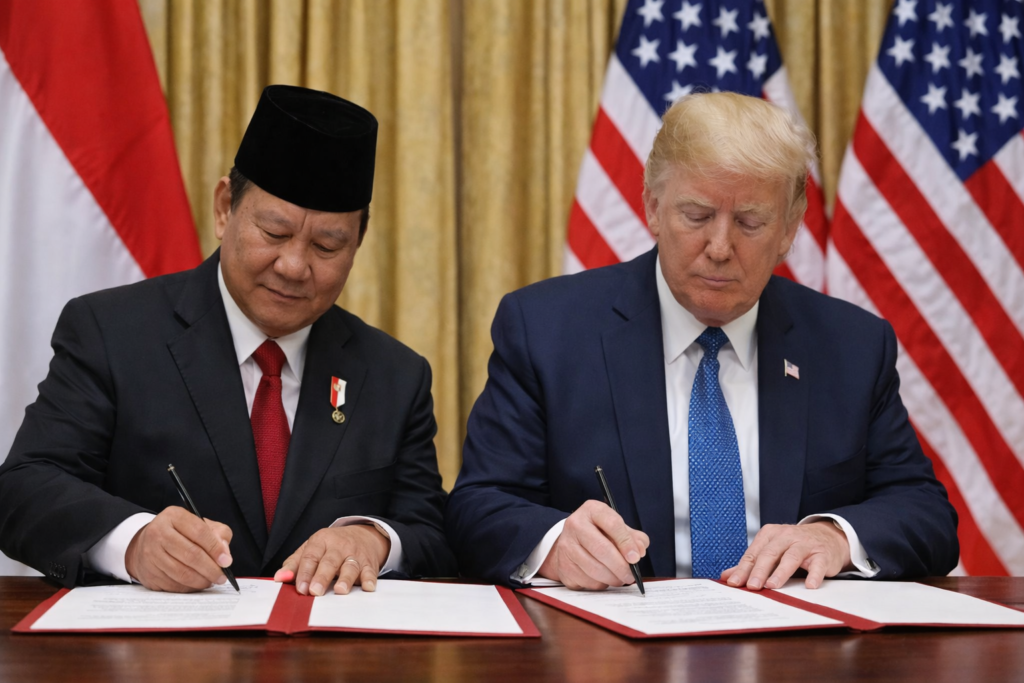
On February 18–19, 2026, Indonesia and the U.S. established a landmark bilateral economic relationship with trade agreements valued at $38.4 billion. These commitments, covering various sectors, signal a shift towards deeper economic integration. However, successful implementation hinges on disciplined governance and structural reforms to enhance productivity and living standards for Indonesians.
There’s been a notable sell-off in US markets this week, with equities and Treasuries feeling pressure as geopolitical tensions between the United States and the European Union escalated after President Trump’s aggressive statements on Greenland. The S&P 500, Dow Jones, and Nasdaq all saw significant weakness, safe-haven assets like gold jumped, and yields on U.S. Treasuries rose as investors reassessed risk and the prospect of a transatlantic trade conflict.
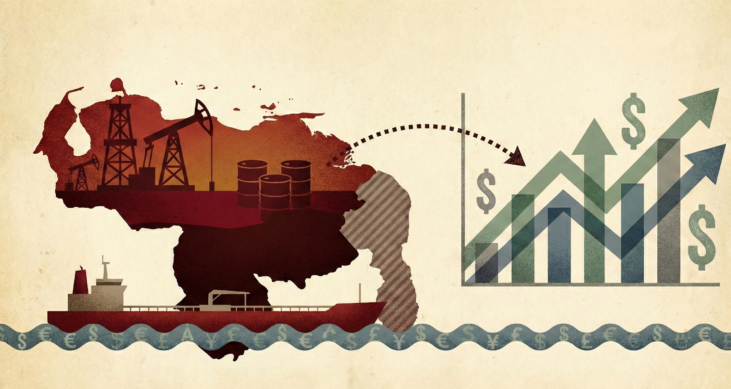
Following the US intervention on Jan 3rd and the establishment of the Interim Government, we now see that the US Dept. of Energy is officially rolling back sanctions to allow around 30-50M barrels of Venezuelan crude to flow into the US.