
More results

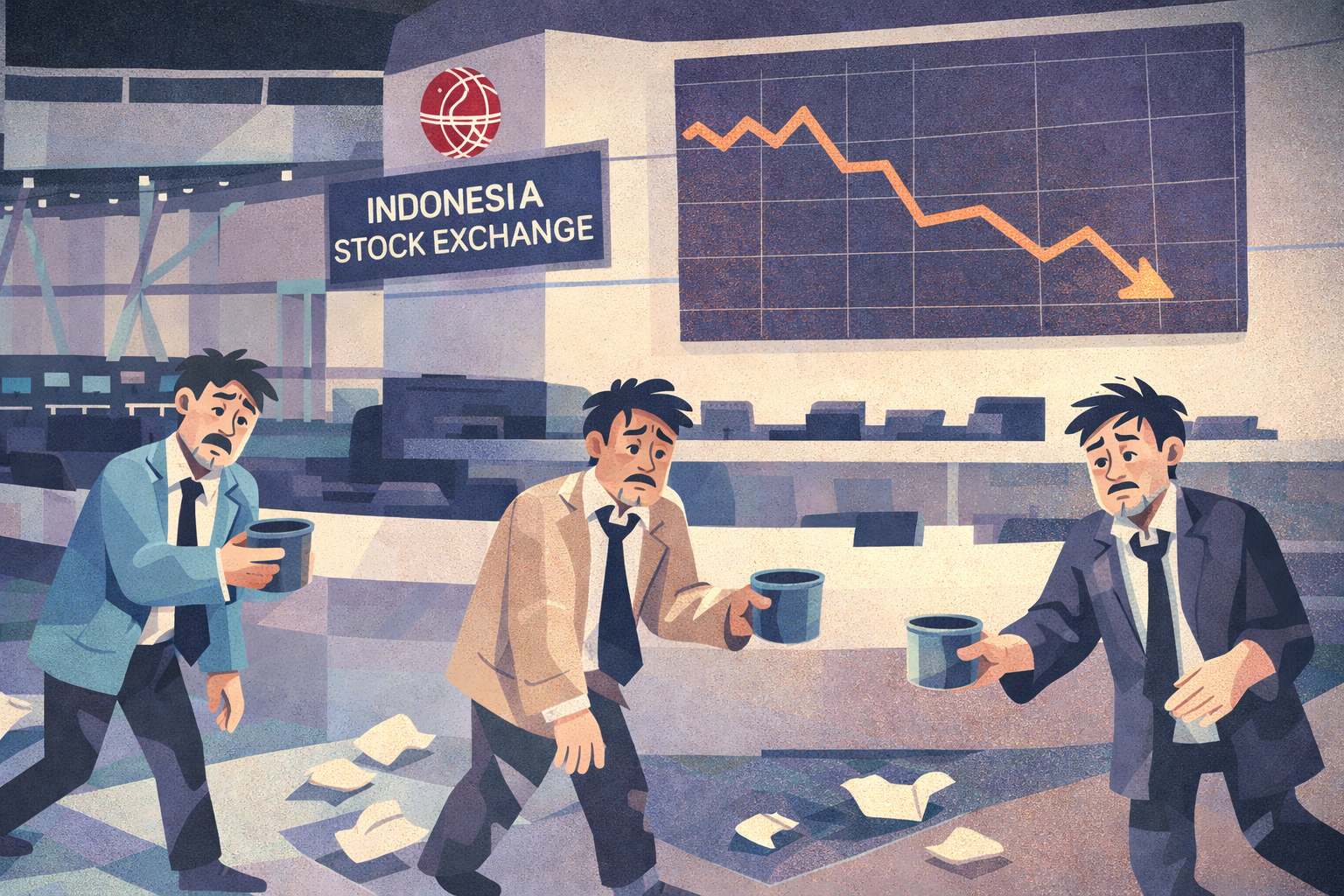
The Indonesia Composite Index (IHSG) closed with sharp fluctuations in early trading this week. Ending the session in negative territory, the index’s movement reflects investors’ wait-and-see stance toward a combination of domestic political dynamics and uncertainty surrounding global monetary policy.
Geopolitical Pressure and Foreign Policy
From the external side, Indonesia’s capital market remains overshadowed by volatility in global indices. Unresolved geopolitical tensions and persistently high U.S. inflation data have forced investors to adopt a more conservative posture. Expectations regarding the direction of the Federal Reserve’s benchmark interest rate policy remain a crucial factor; any hawkish statements from U.S. monetary authorities have a direct impact on weakening the Rupiah, which in turn pressures the performance of blue-chip stocks in the banking and consumer sectors.
Domestic Political Dynamics
Domestically, market attention is focused on the stability of the government transition and the announcement of the latest fiscal policies. Investors are closely watching how far the new cabinet can execute its agenda without significantly widening the budget deficit. Issues surrounding the continuity of national strategic projects and the direction of energy subsidy policy are key catalysts for stock movements in the infrastructure and energy sectors. Political uncertainty—even if short-term—often triggers profit-taking by foreign investors seeking safer assets (safe havens).
Technical Analysis and Weekly Projection
From a technical perspective, the IHSG is currently testing an important psychological level. If selling pressure continues, there is a risk of a correction toward deeper support levels. However, still-solid domestic economic fundamentals provide a cushion to prevent a drastic decline.
Estimated Impact Over the Coming Week:
- High Volatility: The market is expected to continue moving within a consolidation range with a weakening bias while awaiting the release of the latest economic data.
- Foreign Capital Flows: There is potential for short-term capital outflows if the Rupiah remains under pressure against the U.S. dollar.
- Sector Rotation: Investors are likely to rotate into defensive sectors such as healthcare and telecommunications to mitigate risk.
Overall, the challenges facing the IHSG in the week ahead stem from the synchronization of global macroeconomic pressures and domestic political adjustment. Prudence in portfolio selection will be key for market participants in navigating this uncertainty.
Join the Conversation
Please log in or create an account to view comments and post your own.