
More results

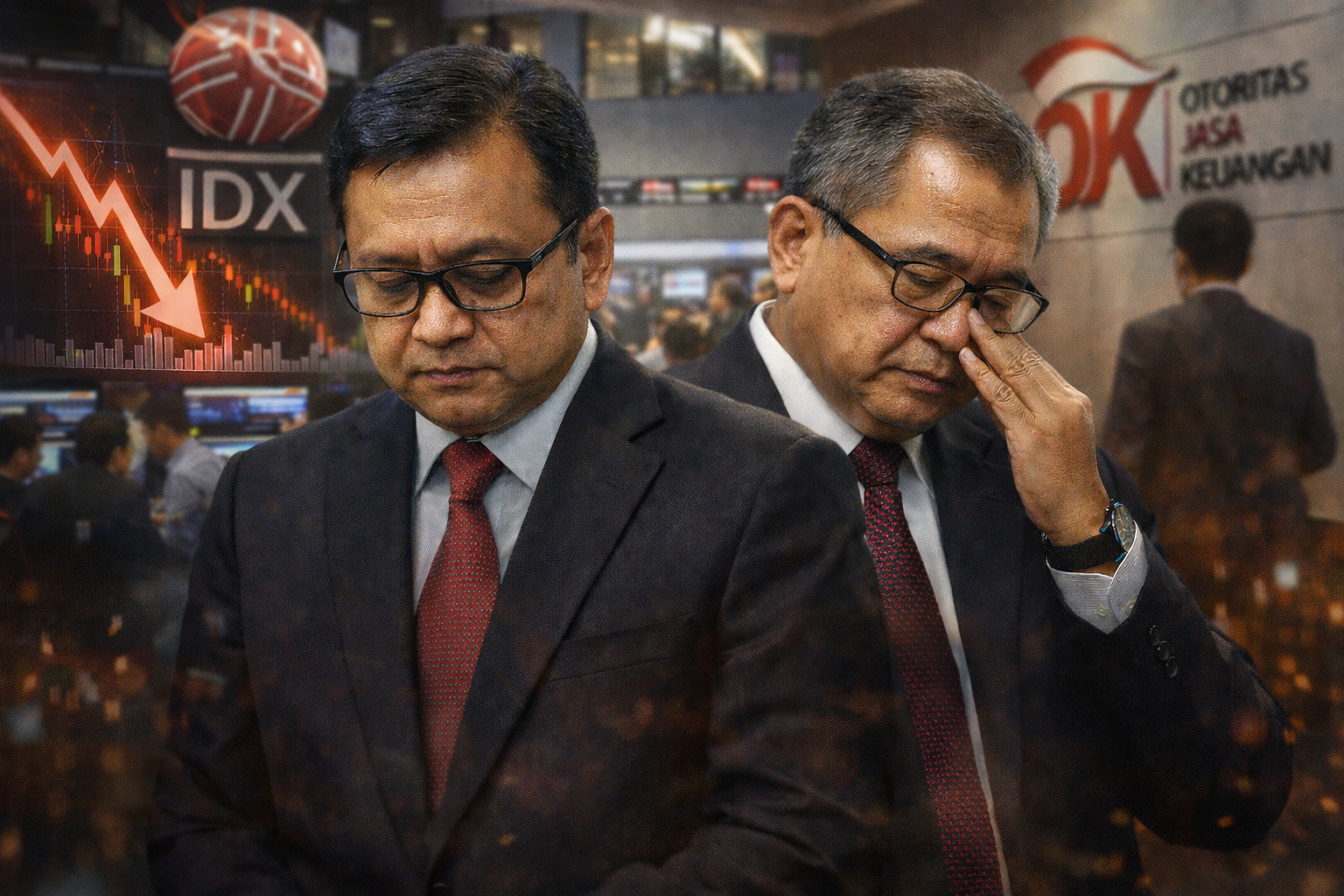
In an unprecedented leadership shift at the heart of Indonesia’s capital market, top officials at both the Indonesia Stock Exchange (IDX) and the Financial Services Authority (OJK) tendered their resignations late January 2026 following a sharp market sell-off and mounting concerns over governance and investor confidence.
The departures include the President Director of the Indonesia Stock Exchange, Iman Rachman, and several senior leaders at the Financial Services Authority, including OJK Chairman Mahendra Siregar and other key commissioners.
Plunge in the Jakarta Composite Index Sparks Crisis
The resignations were triggered by a significant market downturn that wiped out billions of dollars in market value. A global index provider, MSCI, flagged serious concerns about transparency and fundamental investability issues in the Indonesian stock market and halted updates to its emerging market indices involving Indonesian stocks. This warning led to panic selling and one of the steepest drops in the Jakarta Composite Index (IHSG) in recent memory.
As a result of this market stress, investors faced rapid sell-offs, two consecutive trading halts, and sharp losses in benchmark stocks before some stabilization efforts began.
Leaders Step Down in the Name of Accountability
Iman Rachman, head of the IDX, announced his resignation citing responsibility for the recent market volatility and the need for institutional reforms to restore confidence in Indonesia’s capital markets.
Shortly after, Mahendra Siregar and other senior members of the OJK leadership also stepped aside, describing their resignations as a “moral responsibility” that supports broader efforts to recalibrate and stabilize the financial sector.
To maintain regulatory continuity, the OJK has already appointed interim members to its Board of Commissioners, ensuring that oversight and supervision functions continue as reforms are planned and implemented.
Government and Institutional Reactions
Officials and lawmakers across Indonesia reacted to the resignations in ways that reflect both concern and cautious optimism:
- Government officials moved quickly to calm markets and reaffirm commitments to transparency and stability. The government outlined plans for capital market reforms and regulatory improvements intended to address the issues raised by investors and global market indices.
- Finance Minister Purbaya Yudhi Sadewa described the IDX chief’s resignation as a “positive signal” of accountability and a step toward restoring credibility in Indonesia’s financial markets, framing the leadership changes as necessary rather than symptomatic of a systemic crisis.
- Lawmakers from the House of Representatives’ Budget Committee (Banggar DPR) praised the resignations as a rare and ethical display of leadership accountability that could help strengthen public trust. However, they also cautioned that resignations alone are insufficient without meaningful policy reforms to improve transparency and market depth.
The Road Ahead for Indonesia’s Capital Markets
In the wake of these leadership changes, officials have emphasized several strategic initiatives to bolster investor confidence and address structural issues:
- Improving transparency, especially around shareholding and ownership structures.
- Raising minimum free-float requirements for listed companies to increase liquidity and reduce concentration risk.
- Closer engagement with global index providers and international investors to align Indonesia’s markets with global standards.
Market analysts have noted that these reforms, while overdue, could ultimately strengthen Indonesia’s financial markets if implemented rapidly and credibly. They stress the need for seasoned leadership to steer these transitions and bridge the gap between local practices and international expectations.
Investor Sentiment and Outlook
Following the resignations and initial government responses, there were early signs of modest stabilization in market trading. However, analysts warn that confidence will hinge on the success of substantive reforms and the appointment of new leaders capable of restoring faith among domestic and foreign investors.
The broader economic backdrop, including fiscal policy concerns and recent political shifts, will also play a key role in how quickly Indonesia can regain momentum in its capital markets.
Join the Conversation
Please log in or create an account to view comments and post your own.