
More results

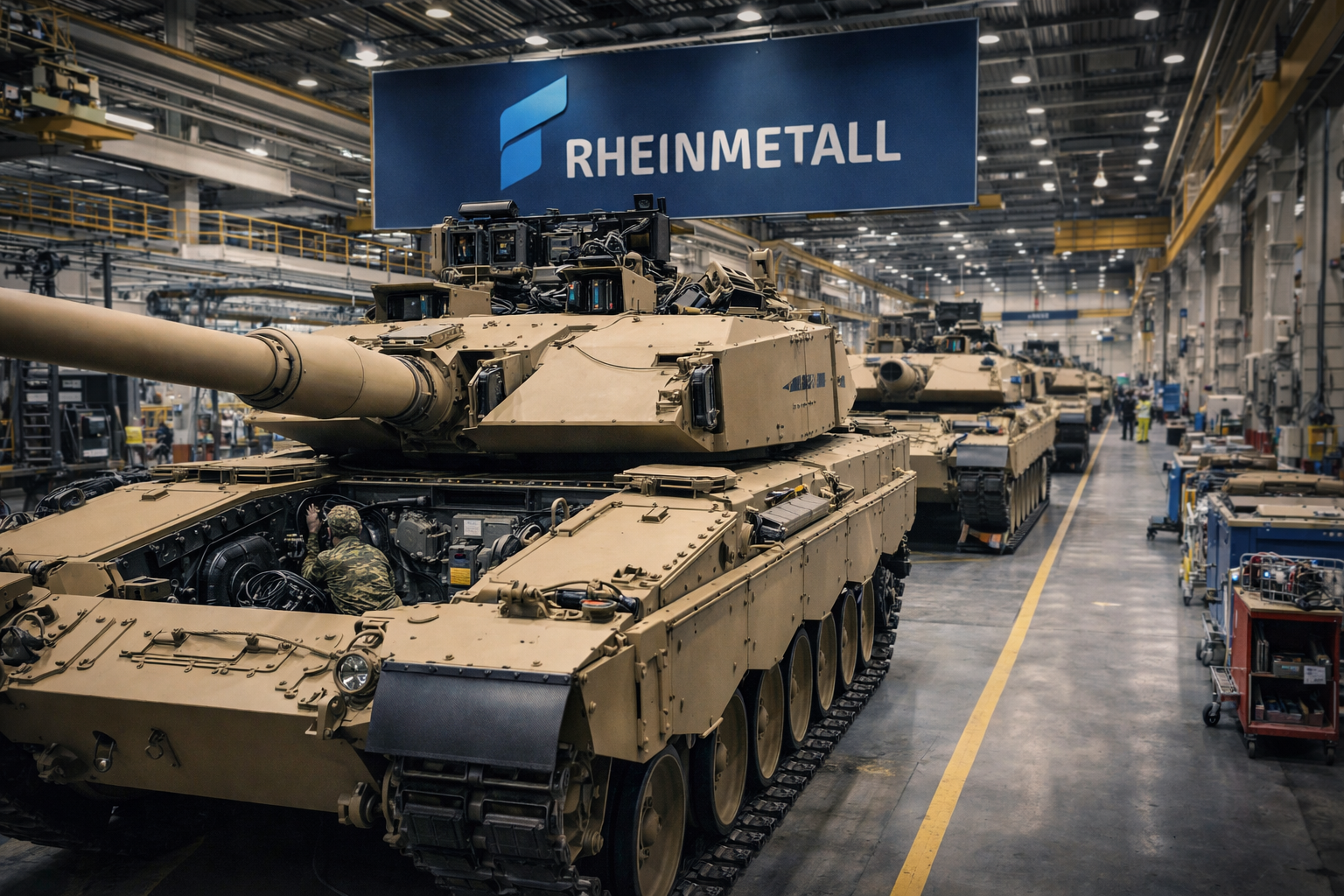
Ever since Russia launched its imperialist invasion of Ukraine, European defence companies have been scrambling to fill the sudden influx of new orders whilst simultaneously improving their own capacity following decades of stagnation due to the ‘peace dividend era’, amongst other things. One company that is currently taking off is Germany’s Rheinmetall whose stock price has currently risen by 1000%-1800%. Rheinmetall’s rise are mainly caused by a rising backlog of orders which are currently valued at around EUR 62 billion in early 2025.
This rise in demand opens new avenue for the company as they can now spend more money to expand and modernize facilities, enhance R&D, secure more lucrative contracts with European governments or overseas customers, and more importantly create new jobs in towns that have been previously overlooked or unnoticed. One such region is Unterlüß in North Germany which has been designated as a site for a new ammunition factory that will produce much of Europe’s munitions. Additionally, in February 2025, Rheinmetall announced plans to convert two inactive automobile factories in Berlin and Neuss into so-called ‘hybrid plants’. Instead of making cars, those factories will instead produce ammo and other defence products.
All of these developments are clear indications that economics of scale, once a major asset of the western world throughout World War 2 and much of the Cold War, is once again back in action. This return can become a comparative advantage not just to Rheinmetall, but to the entire European defence industrial complex as expanding facilities while simultaneously keeping production lines warm with hot commodity products like the Skynex, HX utility trucks, artillery and mortar shells, and various types of small arms ammunition will inevitably reduce their cost, thereby enticing more potential customers.
However, to achieve the necessary output, it is imperative to have a high degree of material security. In this regard, Germany are vulnerable to distruption as they import at least 90% of their raw materials from overseas, particularly China, Russia, and the United States. In order to mitigate possible distruptions, Germany must have a reserve that functions not just as a buffer stock, but as a part of a broader industrial policy to achieve strategic autonomy and maintaining competitive edge on the market.
Join the Conversation
Please log in or create an account to view comments and post your own.