
More results

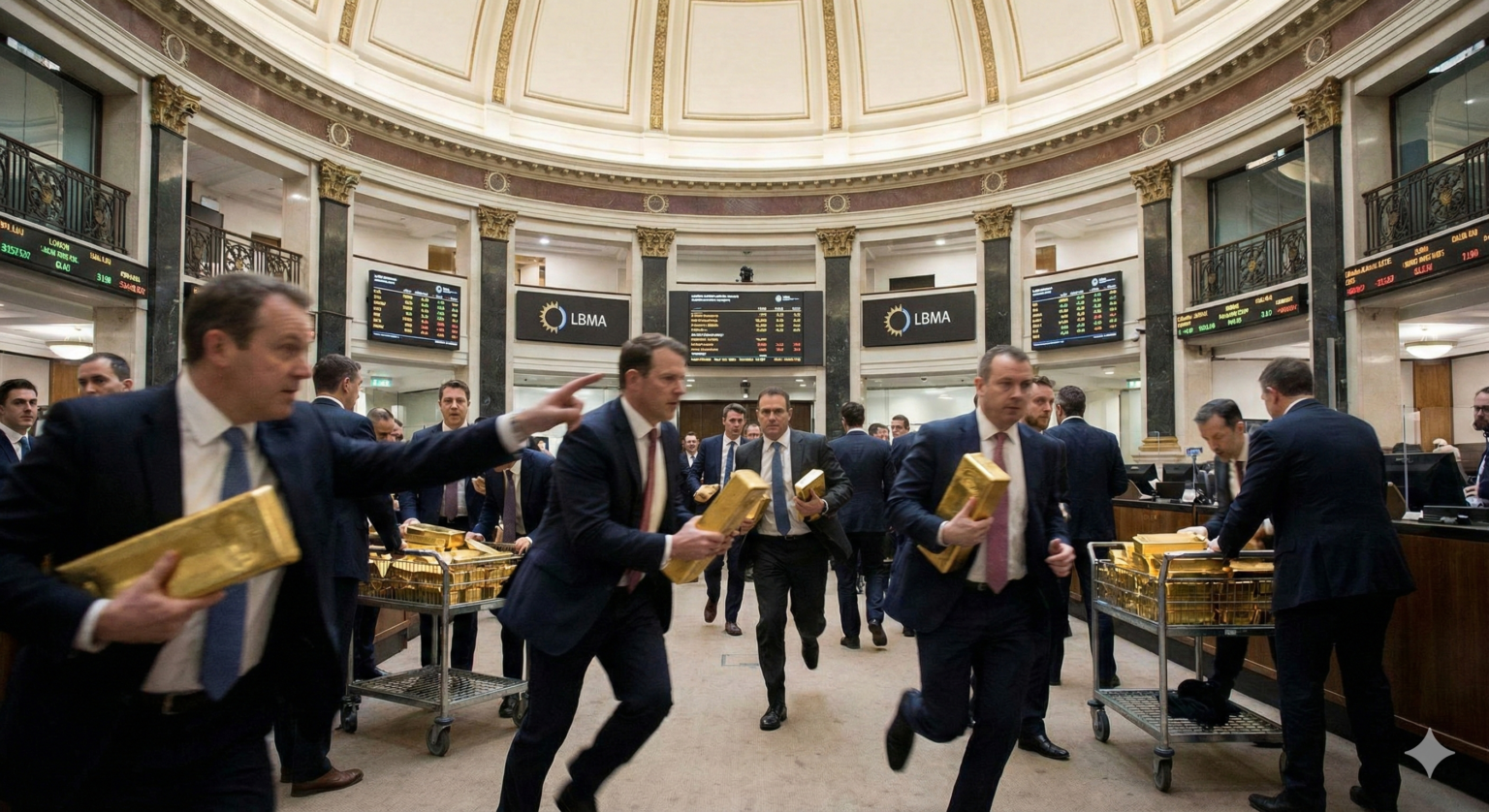
In the annals of commodities trading, few weeks will offer as stark a case study in market microstructure and cross-asset correlation as the final days of January 2026. For wealth managers and institutional investors, the price action of gold over the last 48 hours—swinging violently from a record high near $5,500 per ounce down to the brink of $5,000, before stabilizing around $5,300—serves as a potent reminder that in moments of acute stress, liquidity dictates price more than fundamentals.
The rally that preceded this volatility was driven by a confluence of macroeconomic tailwinds. Throughout January, we observed a decoupling of gold from real rates, suggesting a market less concerned with the opportunity cost of holding non-yielding assets and more focused on sovereign accumulation. Speculation regarding imminent U.S. trade tariffs created a perceived supply bottleneck, prompting dealers and sovereign buyers to aggressively front-run potential restrictions. This culminated midweek in a classic “short squeeze,” where technical buying begat further buying, driving spot prices vertically to an intraday high of $5,520. At that peak, the asset was trading nearly three standard deviations above its moving average—a statistical extremity that historically signals an impending mean reversion.
However, the trigger for the reversal was not found within the metals complex itself, but rather in the equity markets. On Thursday, January 29, a sharp correction in the technology sector, specifically within high-beta AI constituents, precipitated a broader liquidity event. As equity portfolios drew down, margin calls were triggered across major prime brokerages. In such scenarios, correlations essentially move to one. Investors facing capital calls do not sell what they want to sell; they sell what they can sell. Gold, sitting on substantial year-to-date gains and highly liquid, became a source of funds. This forced liquidation drove the price down over 9% in a single session, testing the psychological and technical support level of $5,000.
Crucially, the bounce from the $5,000 lows to the current trading range of $5,300 suggests that the structural bull case remains intact. The “weak hands”—largely leveraged speculative interest—have likely been washed out, transferring ownership to longer-term allocators who stepped in to defend the $5,000 floor. Furthermore, the Federal Reserve’s decision this week to hold rates steady at 3.50%–3.75%, while initially viewed as hawkish, provides a stable denominator for asset pricing moving forward. The market has now digested the tariff clarifications from the White House, removing the panic-premium that inflated prices earlier in the week.
Looking ahead, we view the current consolidation around $5,300 as a healthy technical reset. The extreme overbought conditions have been alleviated, and the market has re-established a more defensible valuation range. For the prudent investor, this episode underscores the importance of position sizing and the recognition that even “safe haven” assets are not immune to the contagion of a liquidity crunch. We maintain a constructive outlook on the metal, viewing the $5,000 level as a verified support zone, while acknowledging that volatility will likely persist as the market searches for a new equilibrium.
Join the Conversation
Please log in or create an account to view comments and post your own.