
More results
Indonesia’s Disaster-Linked Corporate Takeovers Raise Alarming Questions About Power, Accountability, and Nature

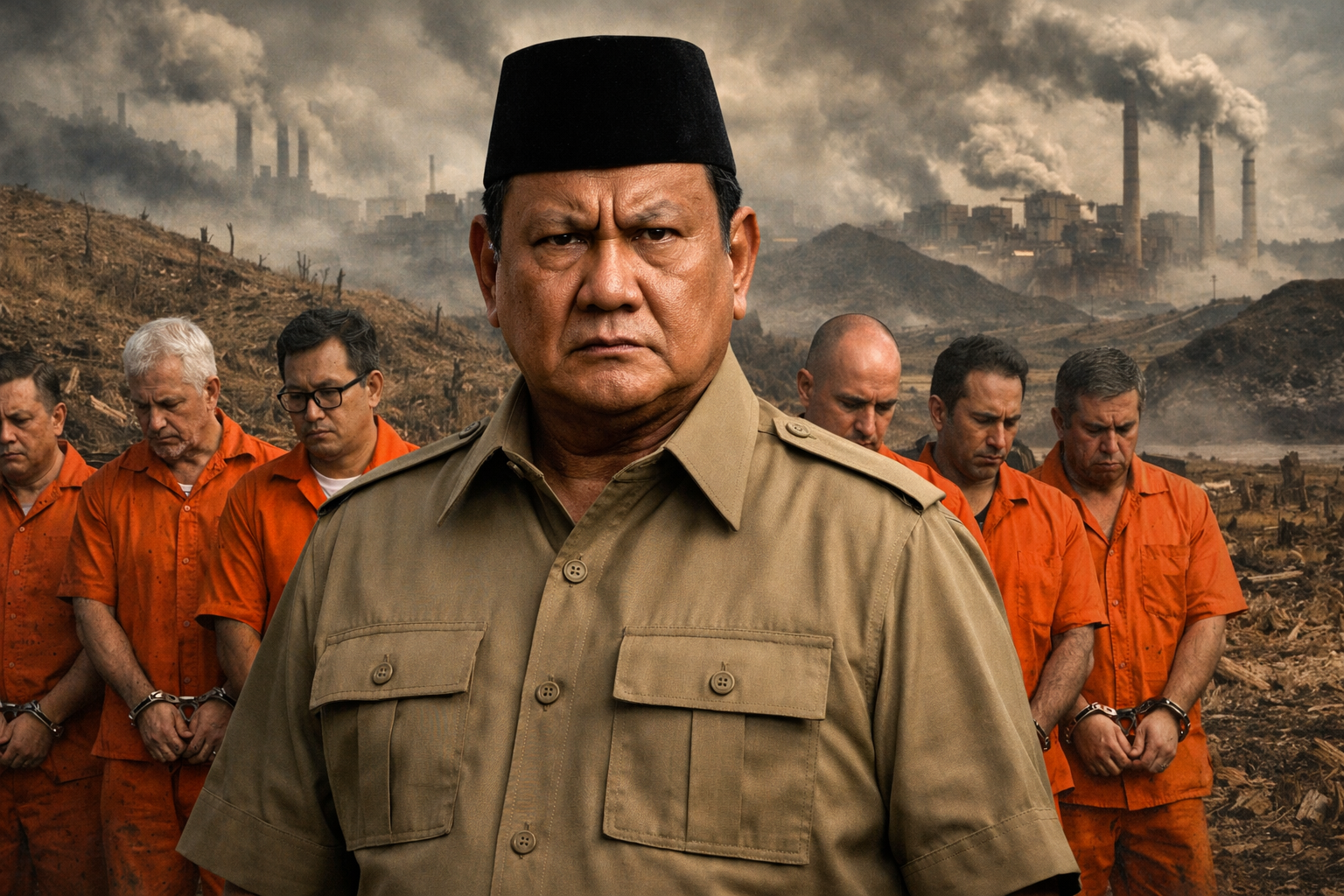
When catastrophic floods and landslides swept through parts of Sumatra in late 2025, the human and environmental toll was undeniable. Entire villages were inundated, infrastructure collapsed, and long-standing warnings about deforestation and land mismanagement appeared grimly vindicated. What followed, however, has proven almost as consequential as the disaster itself: a sweeping state intervention into the corporate landscape of Sumatra that is now reshaping Indonesia’s political economy.
In January 2026, President Prabowo Subianto ordered the revocation of permits held by 28 companies operating in forestry, plantations, and mining, after official investigations concluded their activities had violated forest-use regulations and worsened ecological vulnerability. The move was initially framed as a long-overdue act of environmental enforcement. Yet the government’s next step — transferring many of these assets to state-owned enterprises (BUMN) via the sovereign wealth fund Danantara Indonesia — has turned enforcement into something far more contentious.
Rather than closure, restoration, or rewilding, the state has chosen continuation — only now under public ownership.
From Environmental Sanction to State Control
The government’s justification rests on a familiar argument: economic continuity. Officials argue that shutting down large operations outright would destroy jobs, disrupt regional economies, and leave valuable assets idle. By placing them under BUMN management, production can continue while allegedly improving governance and compliance.
Yet this logic raises uncomfortable questions. If these companies were deemed environmentally harmful enough to have their permits revoked, why are their operations suitable to continue at all — merely under different ownership? The decision suggests that the problem was never extraction or land conversion itself, but rather who was doing it.
This approach blurs the line between environmental accountability and opportunistic nationalisation. Instead of serving as a corrective mechanism, permit revocation becomes a gateway for the state to absorb strategic land and resources, concentrating economic power while sidestepping the harder — and costlier — task of ecological repair.
Markets React to a New Kind of Risk
Financial markets were quick to pick up on the deeper implications. Indonesia’s stock market has shown heightened volatility since the announcement, as investors reassess regulatory risk across resource-heavy sectors. The concern is not limited to the affected companies themselves, but extends to the broader precedent being set.
For decades, Indonesia’s investment story has been built on predictability: licenses, once granted, could be challenged in court but not casually withdrawn. The Sumatra episode disrupts that assumption. Even if the companies involved are unpopular or environmentally damaging, the method matters. Executive-driven transfers of private assets to state control — with limited judicial transparency — introduce a form of political risk that capital markets are acutely sensitive to.
The message received by investors is not simply “comply with environmental rules,” but rather “ownership itself is conditional on political alignment.”
Authoritarian Drift Disguised as Environmentalism
There is also a growing concern that the policy reflects a broader authoritarian tendency in governance. Environmental protection, while urgent and necessary, is being deployed through top-down executive action with minimal parliamentary debate, civil society participation, or independent oversight.
This concentration of authority mirrors a larger shift in Indonesia’s economic model: a preference for state-led control over strategic sectors, the expansion of BUMN influence, and the marginalisation of alternative pathways — including community-based land management or conservation-first outcomes.
Critically, environmental groups have pointed out that many of the seized concession areas should not be producing at all. Some lie in watersheds, high-risk flood zones, or degraded forests that function as natural buffers against extreme weather. Continuing industrial activity on these lands, even under state ownership, risks repeating the same ecological mistakes that led to disaster in the first place.
The Missed Opportunity for Restoration
Perhaps the most striking omission in the government’s approach is the absence of a serious restoration agenda. Permit revocation created a rare opening to rethink land use in disaster-prone regions — to convert concessions into protected forests, peatland recovery zones, or indigenous-managed territories.
Instead, the state has opted for operational continuity. Jobs are preserved, output maintained, and revenues safeguarded — but at the expense of long-term resilience. This choice reflects a deeply ingrained development mindset in which nature is always an asset to be managed, never a system that sometimes must be left alone.
For communities downstream of these concessions, the fear is simple: the names on the ownership documents may change, but the floods will not.
A Precedent With Far-Reaching Consequences
The Sumatra takeovers may well define Indonesia’s governance trajectory for years to come. Supporters see decisive leadership and a willingness to punish corporate abuse. Critics see a troubling fusion of environmental rhetoric and state expansionism, one that weakens legal safeguards while postponing real ecological solutions.
The fundamental question remains unresolved: is this policy about justice, sustainability, and prevention — or about consolidating control over land and capital under the banner of crisis management?
Until restoration, transparency, and community rights are placed at the center of the response, Indonesia risks learning the wrong lessons from disaster — and repeating them, this time under state command rather than private logos.
Join the Conversation
Please log in or create an account to view comments and post your own.