
More results

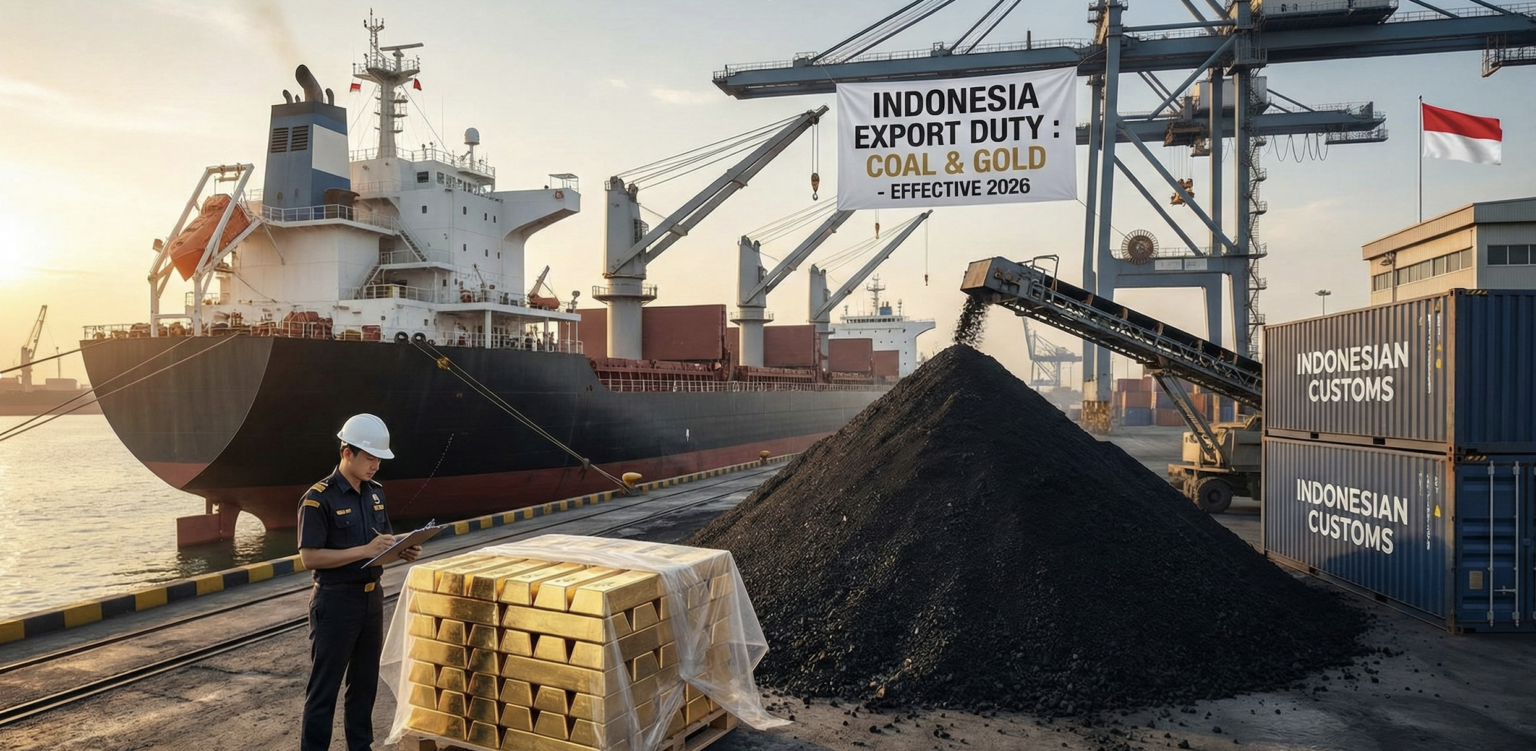
Indonesia is introducing new export taxes on coal and gold as part of a broader effort to strengthen fiscal revenues, manage commodity cycles, and push deeper domestic value creation from its natural resources. Beginning in 2026, the government plans to levy export duties on coal ranging from 1 percent to 5 percent of export value, alongside a tiered gold export tax between 7.5 percent and 15 percent depending on product form and price levels. These measures represent one of the most significant changes to Indonesia’s commodity export regime in recent years.
The policy is rooted in fiscal considerations. Coal and gold remain among Indonesia’s most important export earners, yet government revenues from these sectors are highly exposed to global price volatility. By introducing export duties that rise during periods of elevated prices, the government aims to capture a larger share of windfall gains while maintaining flexibility to ease the burden when prices weaken. For coal, the export tax is expected to be price-responsive rather than fixed, allowing authorities to adjust the effective rate based on international benchmarks. For gold, the projected contribution to state revenue is smaller in absolute terms but strategically important as part of a broader restructuring of the mineral export framework.
Beyond revenue, the gold export tax is closely tied to Indonesia’s long-standing downstreaming agenda. The tiered structure is designed to penalize the export of unrefined or semi-processed gold while offering lower rates for more processed forms. This approach mirrors earlier policies applied to nickel and other minerals, where export restrictions and incentives were used to encourage domestic refining, manufacturing, and industrial investment. In the case of gold, policymakers expect the tax to accelerate investment in local smelters and refineries, potentially increasing employment, technology transfer, and domestic value capture over the medium term.
The coal sector faces a more complex set of implications. Indonesia is the world’s largest thermal coal exporter, and export volumes have already been under pressure from softer global demand, energy transition policies, and price normalization following the post-pandemic boom. Industry groups have cautioned that additional export costs could affect competitiveness, particularly if prices fall or if rival exporters do not impose similar levies. The government has sought to address these concerns by signaling that the tax will be calibrated carefully and may be suspended or reduced during periods of weak prices, positioning it as a countercyclical tool rather than a permanent fixed burden.
From a macroeconomic perspective, the new export taxes reflect Indonesia’s evolving approach to natural resource governance. Rather than relying solely on corporate income taxes and royalties, the state is increasingly using trade-based instruments to stabilize revenues and guide industrial behavior. This strategy supports fiscal sustainability without directly increasing domestic consumption taxes, but it also introduces new considerations for trade balances, foreign exchange earnings, and investor sentiment. Export duties may marginally reduce shipment volumes or alter trade flows, especially in the short term, while incentivizing shifts in production and processing decisions over time.
For investors and market participants, the policy sends a clear signal that regulatory and fiscal frameworks in Indonesia’s commodity sectors will continue to evolve in line with national development priorities. Companies with downstream exposure or plans to invest in domestic processing may benefit from the incentives embedded in the gold tax structure, while pure exporters could face higher costs and greater earnings sensitivity to policy adjustments. Over the longer term, the success of the policy will depend on consistent implementation, transparent pricing formulas, and the capacity of domestic industries to absorb and process more raw materials.
Taken together, the new export taxes on coal and gold underscore Indonesia’s ambition to move beyond being a price taker in global commodity markets. By capturing more value during upcycles and nudging industries toward domestic processing, the government is seeking to balance fiscal resilience, industrial development, and competitiveness in an increasingly uncertain global economic environment.
Summary Highlights
- Indonesia will impose export taxes on coal (1%–5%) and gold (7.5%–15%), effective mainly from 2026.
- Coal export taxes aim to generate significant revenue (around IDR 20 trillion) and respond to price conditions.
- Gold export taxes are tiered by product type and global prices, encouraging domestic processing and value addition.
- Expected state revenue includes approximately IDR 3 trillion from gold duties.
- The policy reflects a broader resource revenue strategy to enhance fiscal sustainability and support downstream industrialisation.
- Industry groups have urged balanced implementation to protect competitiveness, especially in coal.
Join the Conversation
Please log in or create an account to view comments and post your own.