
More results

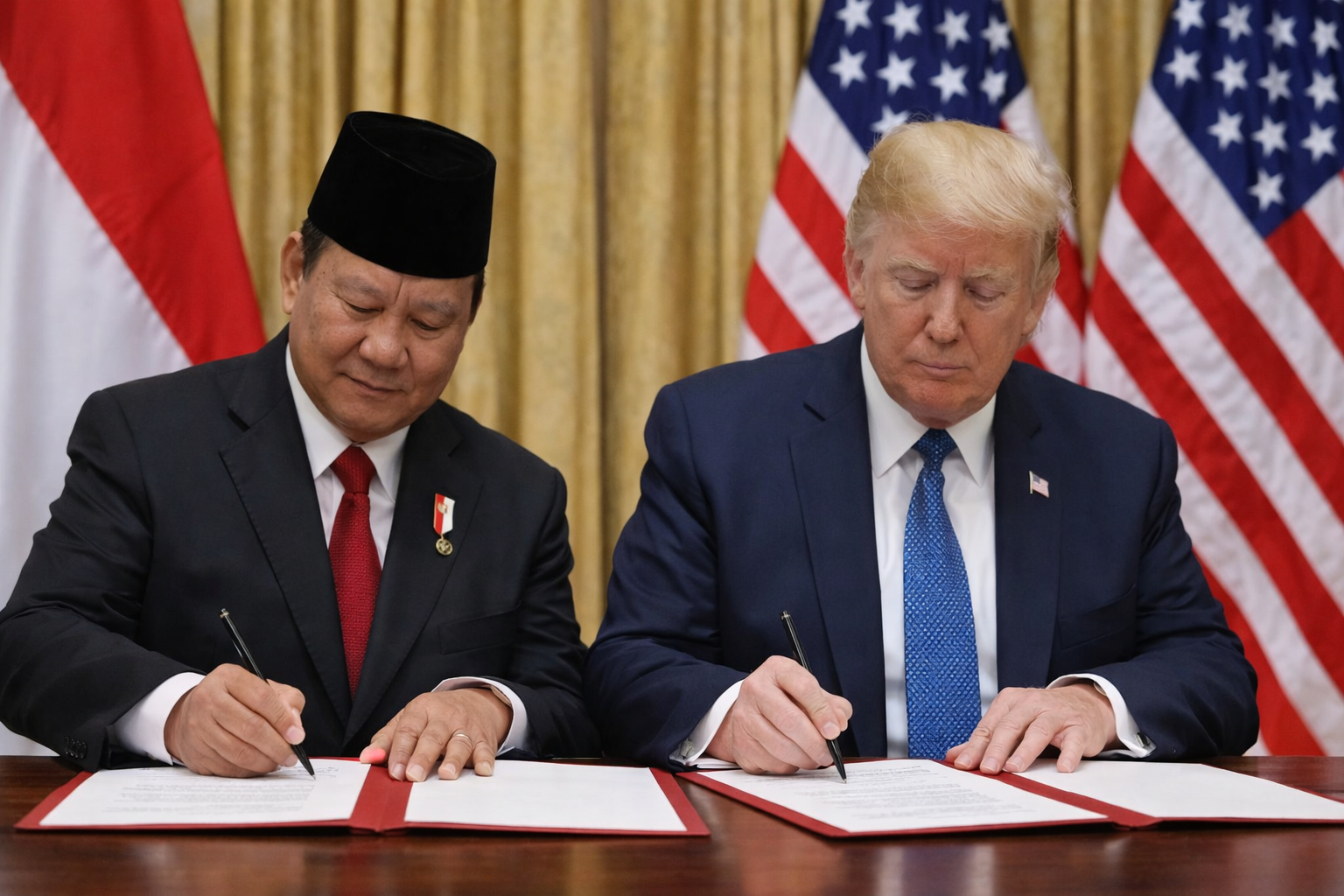
On February 18–19, 2026, Indonesia and the United States reached what can reasonably be described as a watershed moment in their bilateral economic relationship, with Indonesian and U.S. firms signing trade and investment commitments valued at US $38.4 billion. These agreements—formalized at a business summit hosted by the U.S. Chamber of Commerce and coinciding with the conclusion of a broader Agreement on Reciprocal Trade between the two governments—signal a significant shift in cross-Pacific economic engagement and lay the groundwork for deeper integration in strategic sectors of both nations’ economies.
From a macroeconomic perspective, the scale and sectoral breadth of these commitments reflect Indonesia’s evolving economic strategy: one that seeks to balance domestic development objectives with enhanced access to global capital and technology. The deals encompass 11 memoranda of understanding (MoUs) spanning critical minerals and downstream processing, energy, agribusiness, textiles and garments, furniture manufacturing, and high-technology collaborations in sectors such as semiconductors. The inclusion of such a wide array of sectors suggests a deliberate effort by Indonesian policymakers and business leaders to leverage U.S. investment and expertise not only for export-oriented growth but also for domestic industrial upgrading and value chain sophistication.
For Indonesia’s real economy, the implications of this investment are multifaceted. In mining and critical minerals, for example, the partnership between Freeport-McMoRan and Indonesia’s Ministry of Investment to extend and expand operations in the Grasberg minerals district underscores a strategic alignment with global demand for copper and other commodities central to renewable energy and electric vehicle supply chains. This segment of the agreements—especially when viewed against the backdrop of rising global demand for battery-related minerals—could have a catalytic effect on Indonesia’s export profile and industrial ecosystem over the next decade.
The energy and agribusiness components of the deals also merit close attention. Indonesia’s commitments to purchase U.S. energy commodities and agricultural products—such as soybeans, wheat, and corn—signal a diversification of supply sources and a potential stabilization of domestic input markets. While increased imports from the U.S. could expand consumer choice and help manage inflationary pressures on food and energy, they also create dependencies that policymakers will need to balance carefully with domestic production incentives and food security goals.
From a financial markets perspective, this suite of agreements carries both short-term and structural implications. In the immediate term, the announcement has the potential to improve investor sentiment by showcasing Indonesia as a destination for large-scale foreign direct investment (FDI) and long-term capital commitments. Such large headline figures—especially when corroborated by tangible sectors such as semiconductors and energy—can anchor market expectations around future capital inflows, supporting equity valuations in key sectors and potentially strengthening the Indonesian rupiah against major currencies.
However, financial markets will also weigh the terms of the underlying trade agreement between the governments, particularly Indonesia’s acceptance of a 19 percent “reciprocal tariff” on most goods exported to the United States—down from an earlier proposed tariff rate but still relatively high compared to traditional free trade agreements. This tariff backdrop, coupled with negotiated exemptions for select agricultural and commodity exports, will be closely analyzed by investors assessing competitive positioning and margin impacts on export-oriented Indonesian enterprises.
Longer-term, the true test of these agreements will hinge on implementation and the sequencing of investment phases. Memoranda of understanding, by definition, do not carry the same enforceability as binding contracts; they represent intentions and frameworks for future collaboration. The realization of nearly half a hundred billion dollars in commitments will require disciplined project execution, transparent regulatory processes, and continued improvements in Indonesia’s investment climate. For institutional investors, the pace of these reforms—especially in areas such as regulatory clarity, land acquisition, and permitting—will be important determinants of capital allocation decisions.
On the socio-economic front, the potential benefits for Indonesian workers and communities are significant but contingent on policy choices. Investments in manufacturing and technology can spur job creation, elevate skill levels, and promote regional economic development if coupled with strategic human capital initiatives. In resource-rich regions like Papua, expanded mining and processing operations may translate into higher local incomes, provided that environmental and community impact frameworks are robustly enforced.
Yet, the flip side warrants sober attention. Increased integration with global corporate value chains can expose domestic sectors to competitive pressures; for example, local producers of agricultural or intermediate goods may face heightened competition from imported U.S. products. Ensuring that small and medium enterprises (SMEs) can adapt and participate in export-oriented supply chains will be critical to avoiding exacerbation of income inequality or job displacement in vulnerable segments of the economy.
From an investor standpoint, the size and ambition of these deals elevate Indonesia’s profile within emerging market allocations, particularly in portfolios targeting frontier growth and infrastructure-linked returns. Equities in sectors such as mining, energy, and semiconductor manufacturing could attract re-rating if operating environments become more predictable and capital flows materialize as projected. Fixed-income markets, too, might react favorably as improved fiscal revenues and stronger export prospects support sovereign creditworthiness.
In conclusion, the US $38.4 billion trade and investment package, nested within a broader reciprocal trade agreement framework, represents a strategically significant milestone for Indonesia. It encapsulates the promise of deeper economic collaboration with the United States while laying bare the challenges of converting high-level commitments into sustained economic development. For Indonesian policymakers, investors, and its citizens, the path forward will require not just capital and contracts but disciplined governance, targeted structural reforms, and a clear vision for inclusive growth. The success of this initiative will be measured not by the headline sum alone but by the tangible improvements in productivity, employment, and living standards that Indonesians experience in the years ahead.
Join the Conversation
Please log in or create an account to view comments and post your own.